
Still Running Your Quarry on Paper and Guesswork?
There's nothing wrong with running a quarry on spreadsheets and paper registers. Plenty of well-run operations have done exactly that for years, sometimes decades, and done it successfully. A spreadsheet is flexible, cheap, and familiar, and for a business at a certain size, it does the job perfectly well. This isn't a piece about why manual systems are outdated. It's about a specific point that a lot of growing quarry businesses eventually reach, where the same tools that used to work start quietly working against them. Here are five ways to tell if you're there.
1. Month-End Reconciliation Has Started Eating a Full Week
Every quarry owner remembers when month-end used to take an afternoon. You'd pull the weighbridge slips, match them against the dispatch register, cross-check a few invoices, and close the books. Somewhere along the way, that afternoon becomes two days. Then it becomes most of a week, with someone from accounts chasing down a mismatched slip from three weeks ago that nobody can quite explain. This isn't because your team got slower. It's because the volume of transactions grew, but the process of reconciling them by hand didn't change to match it. If your month-end has quietly stretched from a few hours into several days, that's usually the first sign something structural, not just seasonal, is going on.
2. The Yard and the Office Keep Disagreeing on Stock
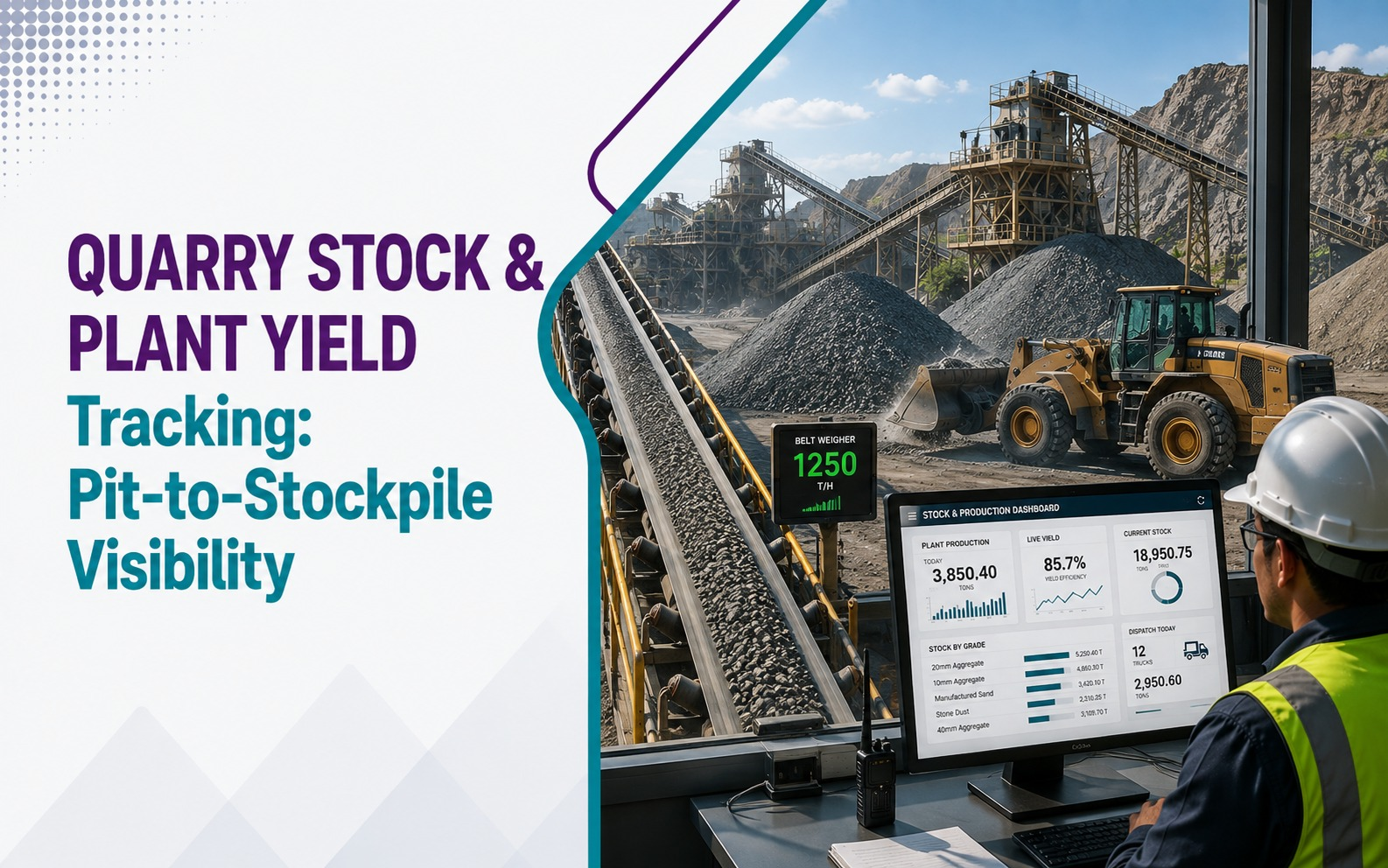
This one is worth sitting with, because it's easy to explain away as a one-off each time it happens. The office says there's a certain quantity of a particular grade available. The yard supervisor, standing in front of the actual pile, says otherwise. Maybe it's dispatched material that hasn't been logged yet, or a production run that hasn't made it into the register. Either way, it happens more than once, and each time it does, someone has to stop and manually reconcile two versions of the same number. We've written in more detail about why this specific gap opens up between site-level stock and office records, and why an end-of-day count usually can't close it, in our piece on quarry stock and production tracking. If this sounds familiar, it's one of the clearest signals that manual tracking has stopped keeping pace with how the business actually runs.
3. Dispatch Coordination Has Started to Feel Like Traffic Control
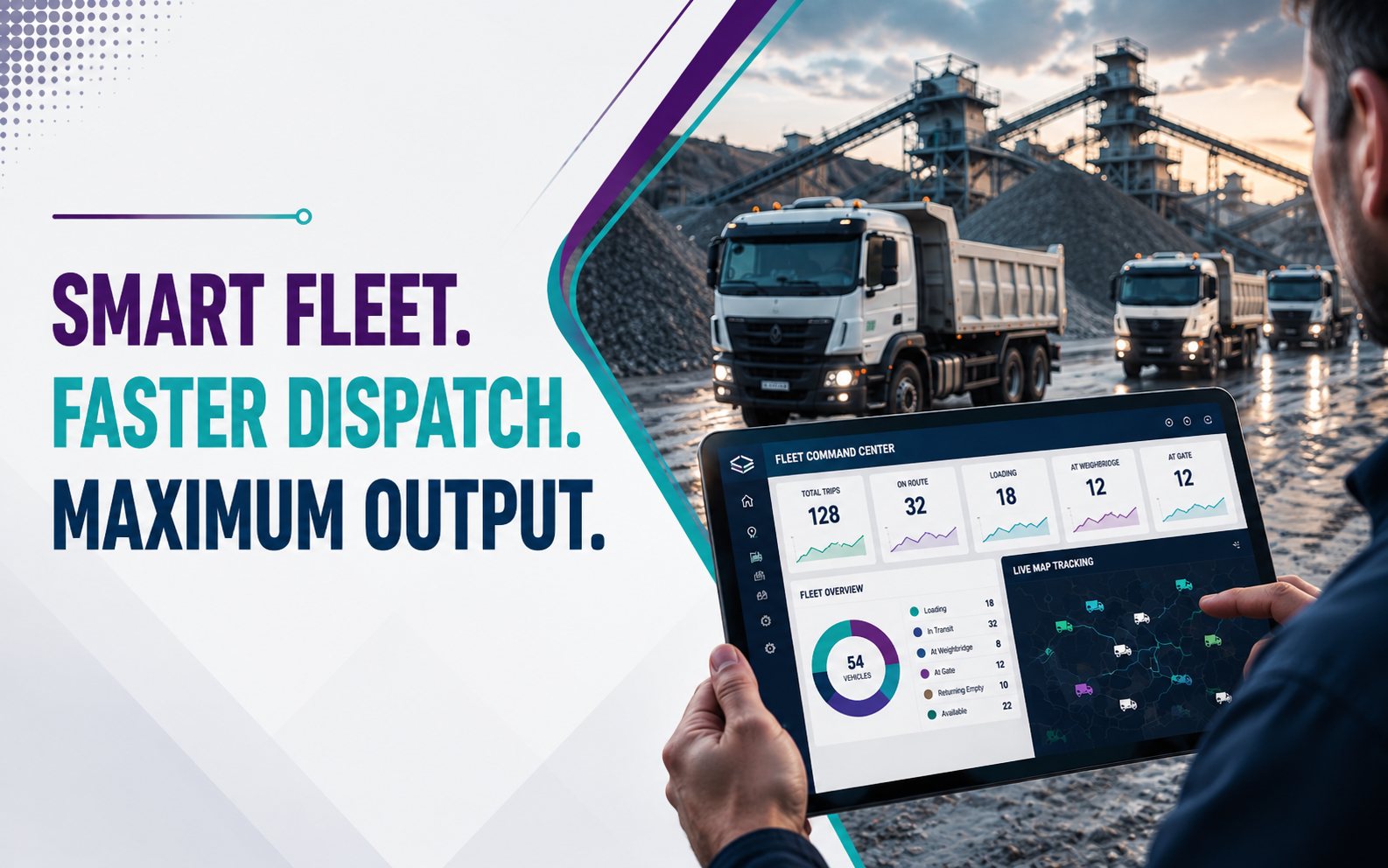
When a quarry runs a small fleet, coordinating trucks by radio or by memory works fine, mostly because there's only so much that can go wrong with two or three vehicles. As the fleet grows, or a second site or shift gets added, that same informal coordination starts to strain. Trucks converge on the same loading point without anyone planning it that way. A driver sits waiting because nobody told them which stockpile to head to next. What used to be simple starts to feel like managing traffic without a signal. We've gone into this specific breakdown, and what actually helps, in our piece on fleet and dispatch management for quarry businesses — if dispatch has started feeling harder to manage even though nothing "broke," this is usually why.
4. Multiple People Are Keeping Their Own Version of the Same Information
This tends to creep in slowly. The sales team keeps a customer list in one spreadsheet. Accounts keeps a separate record of the same customers for billing. Dispatch has its own notes on which customer takes which grade, delivered by which route. None of these are wrong on their own, but the moment two of them disagree, and they eventually will, nobody's quite sure which version is current. If you've ever had to ask three different people to confirm the same basic fact about a customer or an order, that's not a communication problem between your staff. It's a sign that information has outgrown the number of separate places it's currently being kept, and it will keep happening until there's one shared source everyone works from instead of three.
5. Decisions Are Being Made on Numbers That Are Already a Few Days Old
This is the quietest sign, and often the last one people notice. A report that used to be pulled together same-day now takes two or three days to compile, because it means gathering data from several registers and spreadsheets and reconciling them by hand before anyone can look at it. By the time a decision gets made, whether it's about pricing, dispatch priority, or purchasing, it's based on where things stood several days ago, not where they stand today. Nobody chose for this to happen. It's simply what happens when reporting has to be manually assembled rather than being available as it happens, and it tends to get worse, not better, the longer a business grows without changing how it tracks itself.
If Two or More of These Sound Familiar
None of these five signs, on their own, mean something is broken. Every quarry business hits one or two of them occasionally and manages fine. What's worth paying attention to is when two or three of them start showing up regularly, at the same time, because that's usually less a sign of a bad week and more a sign that the business has grown past what its current tools were built to handle.
It's also worth being honest about what comes next, because moving off manual systems isn't a switch you flip and forget. It's a genuine change in how people work day to day, and it takes some adjustment from everyone involved, from the person at the weighbridge to the accounts team closing the books each month. Anyone who tells you it's a seamless, effortless transition isn't being straight with you.
Where Codelayer Comes In
This is exactly the point where Codelayer's Business Analysis & Consultation work is most useful, well before any software conversation even starts. Rather than assuming what a quarry needs, the process begins with understanding how your specific site actually runs today: how stock gets tracked, how dispatch gets coordinated, where your team already has good habits worth preserving, and where the manual process is genuinely holding things back.
From there, GrowBiz ERP's Quarry & Crusher solution is built to bring stock tracking, dispatch coordination, and reporting into one connected system, backed by Codelayer's Data Migration support to bring your existing records across without starting from zero, and Training & User Onboarding to help your team, not just your software, make the shift comfortably rather than all at once.
If two or three of the signs above sounded like your quarry, it might be worth a conversation, not because manual systems are wrong, but because your business may simply have outgrown them.
To see how this fits together, visit the Quarry & Crusher ERP page, or explore the GrowBiz ERP ecosystem to see how it connects across RMC, brick manufacturing, and the other industries Codelayer works in.