A mid-sized quarry operator we spoke with recently had a familiar story. They had invested close to ₹50 lakhs in a well known generic ERP system, expecting it to bring order to their operations. Eighteen months later, an internal audit found that barely 20% of the system's features were actually being used. There was no weighbridge integration, no gatepass tracking, and dispatch was still being coordinated over phone calls and WhatsApp, the same manual process the ERP was supposed to replace.
It's not an unusual story. It's what happens when a business built around tons, trucks, and material movement tries to run on software designed for retail shelves and general ledgers. Eventually, that company moved to a specialized quarry ERP and within weeks, dispatch time dropped and staff actually started using the system daily instead of working around it.
This is the difference between generic ERP and industry-specific ERP, and it's worth understanding before you make a six or seven figure decision.
Why Generic ERP Fails for Specialized Industries
Most well known ERP platforms were originally engineered for retail, finance, or broad-strokes manufacturing. That foundation shows up in every screen and workflow, and it creates real gaps for industries like quarrying, ready-mix concrete (RMC), and brick manufacturing:
- Quarry operations need weighbridge integration and digital gatepass management features that don't exist in a generic system and have to be bolted on, expensively, after the fact.
- RMC plants run on batching plant automation and transit mixer tracking, where a five-minute delay can mean a wasted concrete load. Generic ERP has no native concept of "pour before it sets."
- Brick manufacturers need multi-kiln coordination and batch numbering tied to firing cycles workflows that simply don't map onto a standard manufacturing module.
The result is compromise. A quarry team forced onto a generic system often ends up spending several hours a day on manual workarounds, spreadsheets, printed gate passes, phone based dispatch precisely the inefficiency the ERP was bought to eliminate.
The Real Cost of the Wrong ERP Choice
The damage from a mismatched ERP goes well beyond the sticker price:
- Wasted implementation investment: Projects in the ₹20-50 lakh range aren't unusual, and a large share of that spend goes toward configuring features the business never uses.
- Low adoption: Staff facing daily workarounds lose trust in the system fast, and adoption rates suffer accordingly.
- Manual processes persist: If your team is still filling paper gate passes or tracking dispatch on a whiteboard, the ERP hasn't actually replaced anything; it's just added a layer on top.
- Staff turnover: Frustration with clunky, ill-fitting systems is a real driver of attrition among operations staff.
- Opportunity cost: Every month spent fighting the software is a month of delayed digital transformation and delayed decisions, delayed visibility, and delayed ROI.
Why Industry Specific ERP Is Different
An ERP built specifically for your industry starts from a different premise: it's designed around how your operations actually run, not retrofitted to fit them. That difference shows up in practical ways
- Features map directly onto your real workflows, not an approximation of them
- Implementation is faster because there's far less custom development required
- Adoption is higher because staff recognize the screens as describing their actual job
- ROI arrives sooner because the features being paid for are the features being used
- Results are visible within weeks, not after a year of change requests
This is the thinking behind GrowBiz ERP, Codelayer's specialized ERP product family.
What Is GrowBiz ERP
GrowBiz is Codelayer's industry specific ERP ecosystem, built on Odoo a proven, globally used enterprise platform and configured deeply for the operational realities of specific sectors. It combines the breadth and reliability of enterprise ERP with the precision of industry specialization, and it's available across a growing set of verticals: Quarry & Crusher, Ready-Mix Concrete (RMC), Brick Manufacturing, Mining, Manufacturing, Logistics & Warehousing, and several others.
Rather than asking a manufacturing business to adapt to generic software, GrowBiz starts from the industry's actual processes and builds the ERP around them.
A Closer Look: GrowBiz Quarry & Crusher ERP
To see what industry-specific design actually looks like in practice, it helps to look at one vertical in depth. GrowBiz Quarry & Crusher ERP is purpose-built for quarrying, crushing, and construction materials operations, and covers:
- Weighbridge integration : automatic weight recording and real-time production tracking, removing manual entry entirely
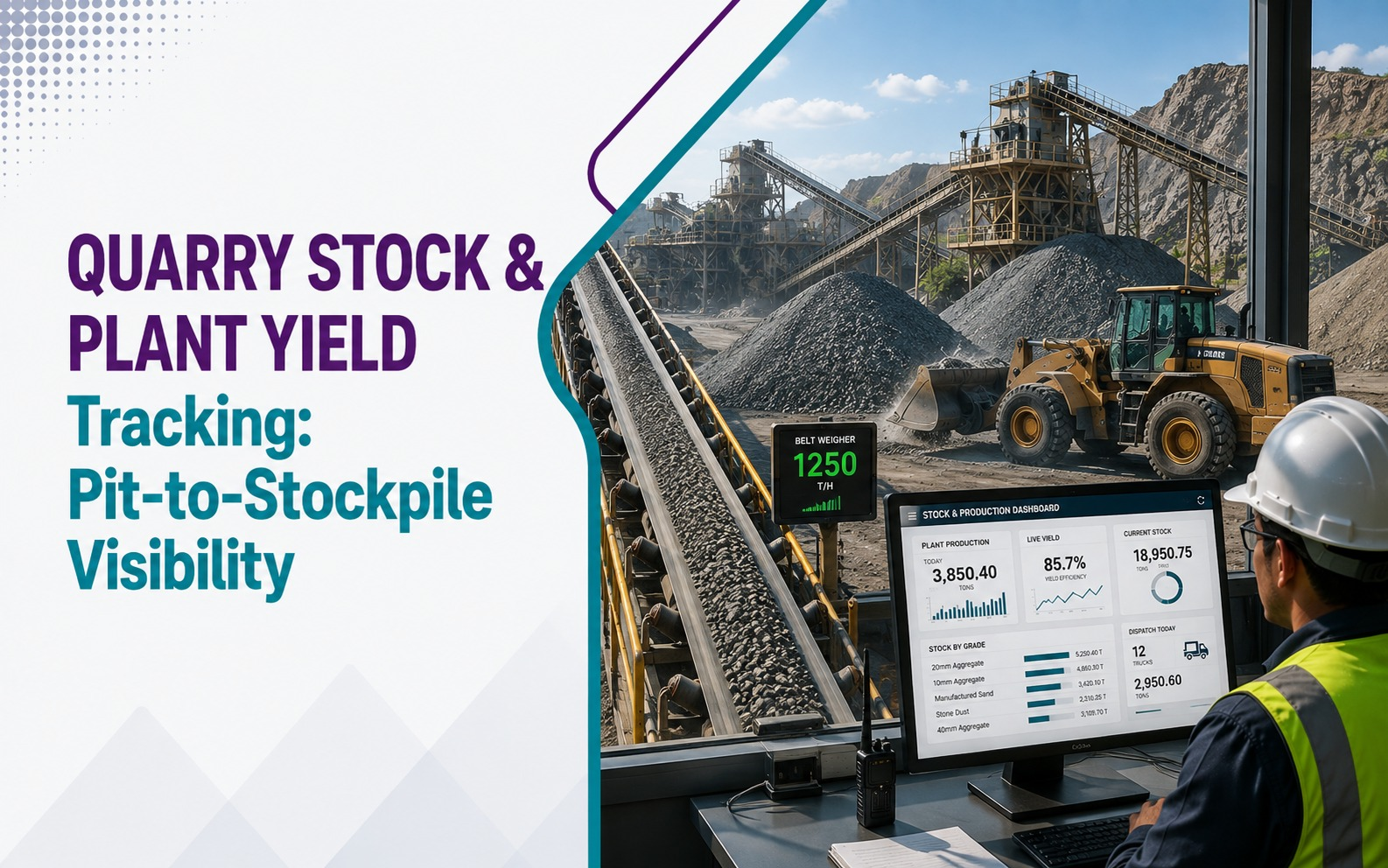
- Production tracking : live visibility into extraction, crushing, and sorting stages
- Fleet management : GPS based tracking for transport vehicles, with a direct line to fuel optimization
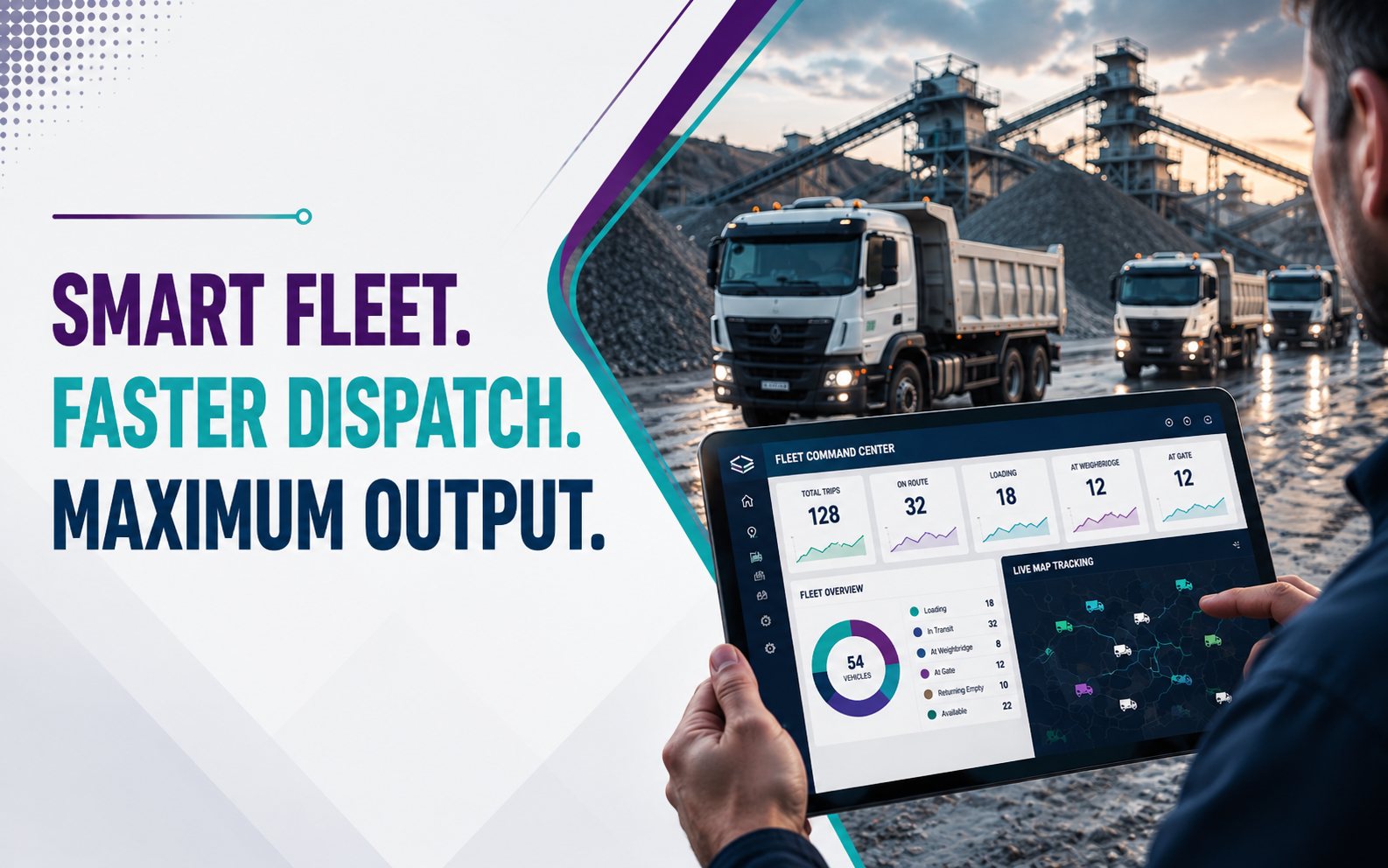
- Dispatch management : automated order fulfillment and vehicle assignment instead of manual coordination
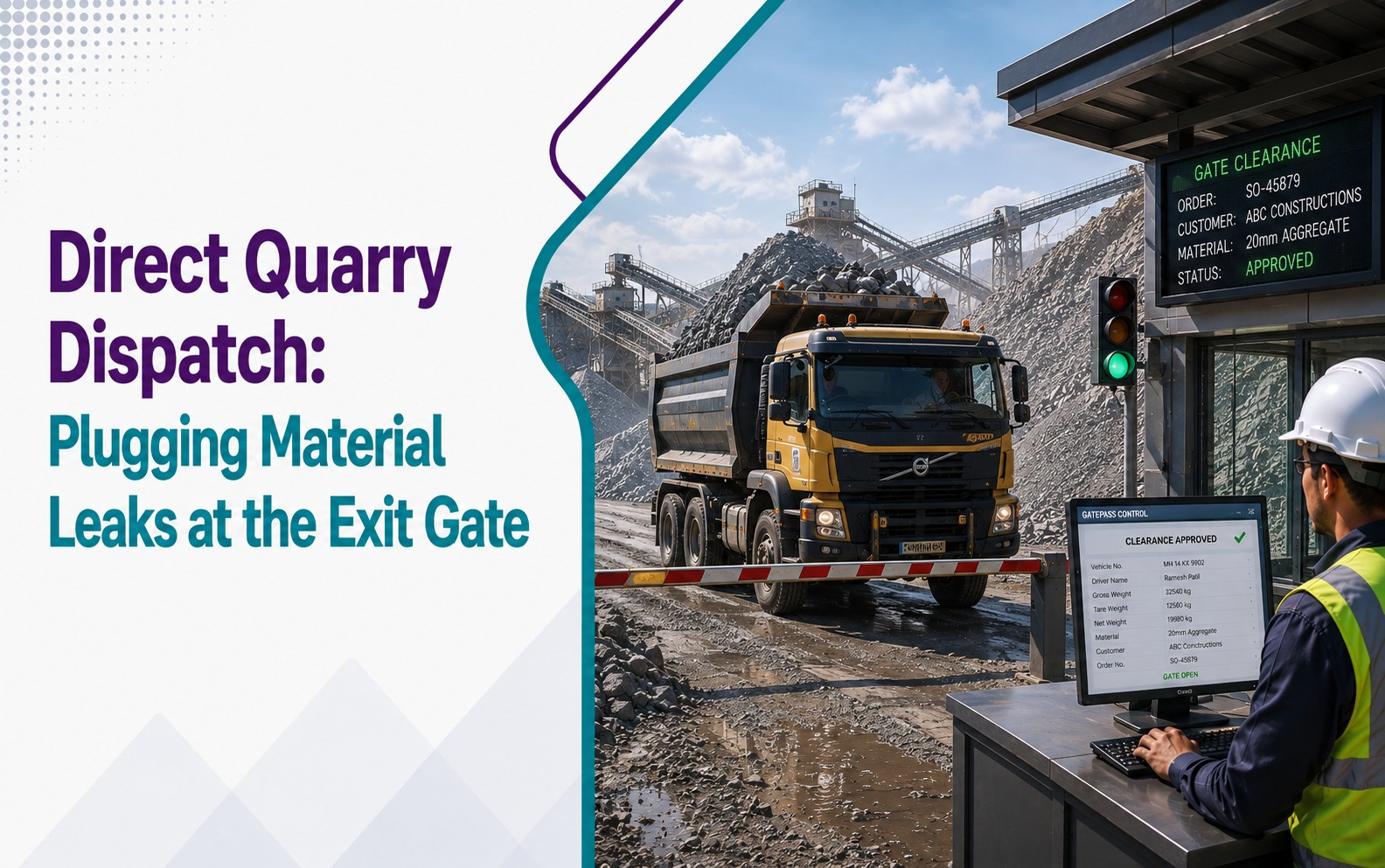
- Digital gatepass system : pass generation and stock control that prevents unauthorized material movement
- GST compliance: automatic tax calculation and invoice generation
- Multi-site management: a single dashboard across multiple quarry locations
- Inventory optimization: real time stock visibility across every site
- Financial management: production cost tracking and profitability analysis by site or product
Each of these features is solving a specific, tangible problem: weighbridge integration removes the manual entry errors that creep into paper-based logs; real time production data lets managers make dispatch and staffing decisions the same day rather than the same week; fleet optimization directly targets fuel spend, one of the largest controllable costs in a quarry operation; dispatch automation cuts the time between order and fulfillment; and gatepass digitization closes the loop on unauthorized material leaving the site.
Beyond Quarry: The GrowBiz Family
Quarry is one entry point into GrowBiz, but the same design philosophy extends across other verticals:
- GrowBiz RMC for concrete plants, covering batching, mix design, dispatch, and quality control where timing is everything
- GrowBiz Brick for brick manufacturers, built around kiln management and the continuous, process driven nature of production
- GrowBiz Manufacturing for general manufacturers needing production planning and quality management
- GrowBiz Logistics & Warehousing for fleet heavy operations that depend on real-time tracking and route optimization
Generic ERP vs GrowBiz: A Quick Comparison
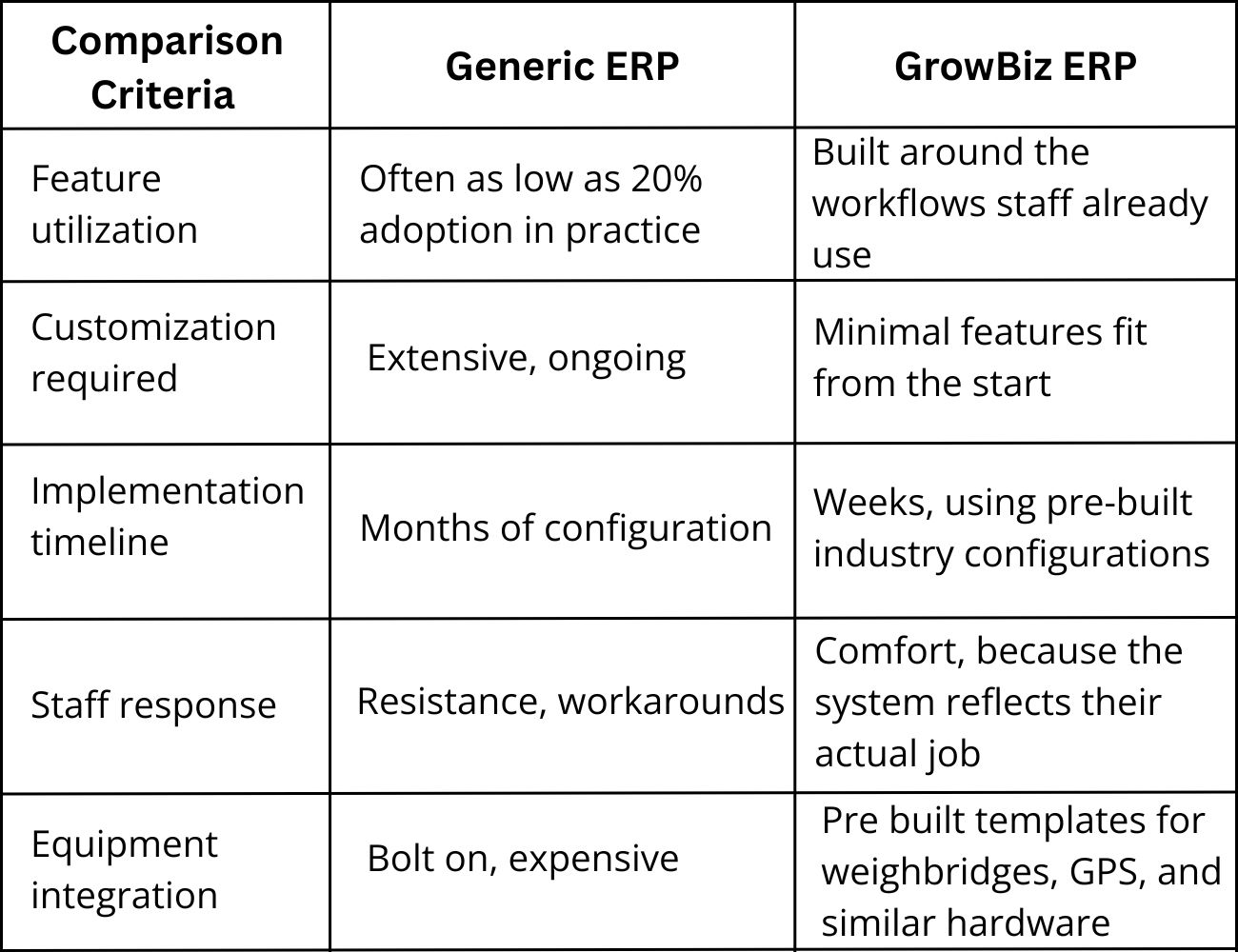
This isn't meant as a sales pitch so much as an honest description of where the two approaches diverge; the trade offs are real either way, and the right fit depends on how specialized your operations actually are.
Why Codelayer Built GrowBiz
GrowBiz didn't start as a product idea in isolation; it came out of a pattern Codelayer kept seeing across client engagements. After 600+ ERP implementations and 25 years in the space, the same story kept repeating: generic ERP platforms simply weren't solving the operational problems that quarry, RMC, and brick manufacturing businesses actually had. That accumulated experience shaped what GrowBiz needed to include, and what it could safely leave out.
Codelayer's Implementation Expertise
Building the product was only half the work the other half was building an implementation process that gets businesses live quickly and correctly. Every GrowBiz vertical comes with:
- An industry specific training program for staff
- Pre built configurations for the most common operational processes
- Integration templates for equipment like weighbridges and GPS systems
- A faster path to go live weeks rather than months
- A track record that reflects a higher implementation success rate
Support & Evolution
GrowBiz isn't a static product. Codelayer continues to refine each vertical based on direct feedback from operations teams using it day to day, along with ongoing integration improvements as new equipment and compliance requirements emerge. The relationship is structured around long-term partnership and customer success not a one time license sale.
The Bottom Line
- Generic ERP is built for broad use cases and struggles to fit specialized industries like quarrying, RMC, and brick manufacturing
- The cost of a poor ERP fit isn't just the license fee it's wasted implementation spend, low adoption, and delayed transformation
- Industry specific ERP is designed around how your business actually operates, which tends to mean faster implementation and stronger results
- GrowBiz ERP is Codelayer's answer to this gap, purpose-built for manufacturing and materials-handling realities
- 25 years of implementation experience and 600+ client engagements inform how GrowBiz is built and deployed
- The right tool for your industry, correctly implemented, tends to deliver better ROI than a generic system stretched to fit
See It in Action
If you're evaluating ERP options for a quarry, RMC, brick, or manufacturing operation, it's worth seeing the difference firsthand rather than taking it on faith.
- Request a demo and see GrowBiz configured for your industry
- Explore GrowBiz Quarry & Crusher ERP in detail
- Talk to an industry specialist about which GrowBiz vertical fits your operations
End Note
This article is intended as an educational resource for businesses evaluating ERP options for industrial and manufacturing operations. The operational scenarios described including the quarry implementation example in the introduction are representative of patterns observed across Codelayer's 25 years of ERP implementation experience and 600 plus client engagements, and are not intended as attributions to specific named clients.
The comparison between generic ERP and GrowBiz ERP presented in this article reflects general directional differences between the two approaches. Individual outcomes will vary depending on business size, operational complexity, number of modules implemented, and the quality of the implementation process. Implementation timelines referenced are indicative and based on typical project profiles larger, multi-site, or more complex engagements will require proportionally longer timelines.