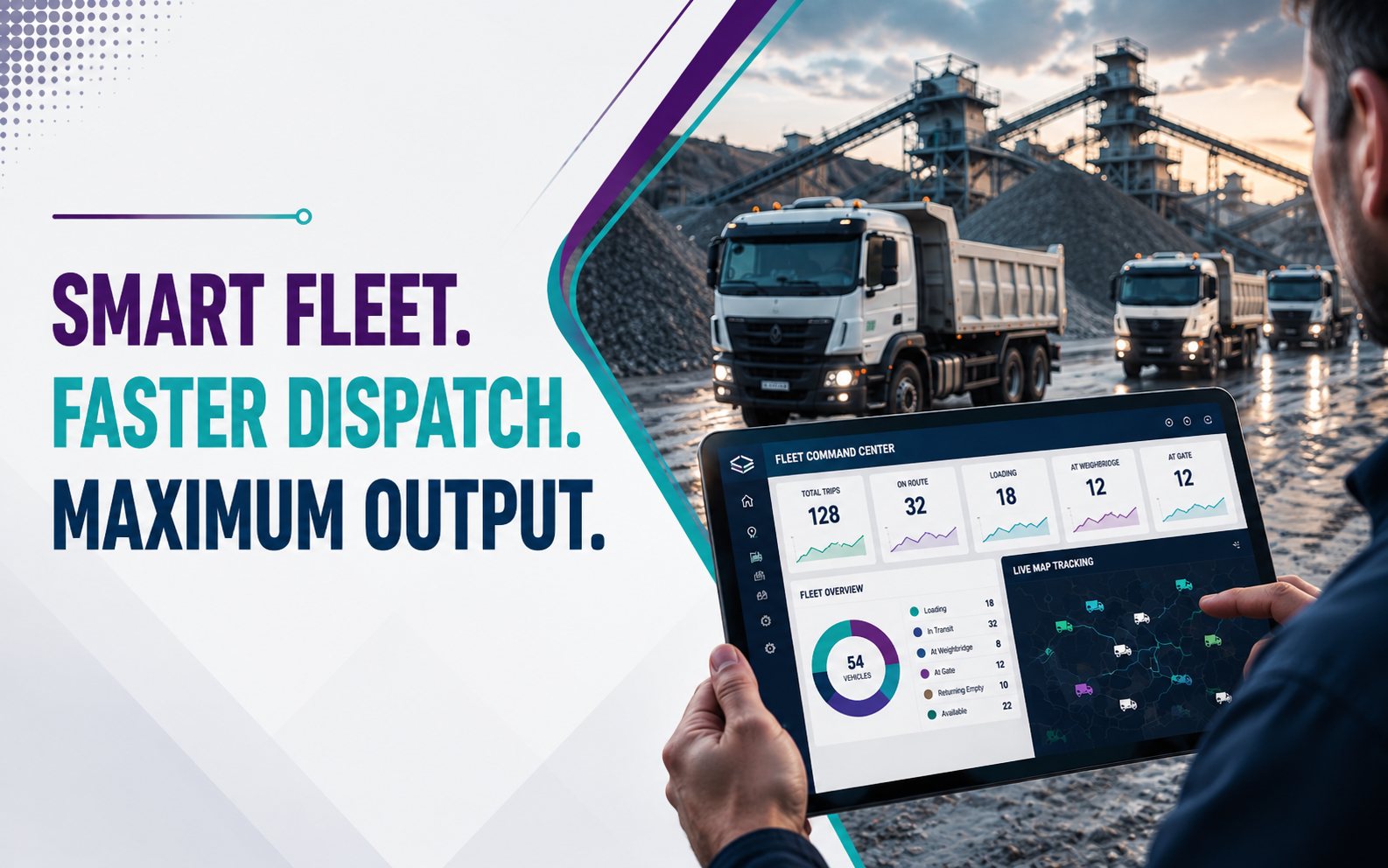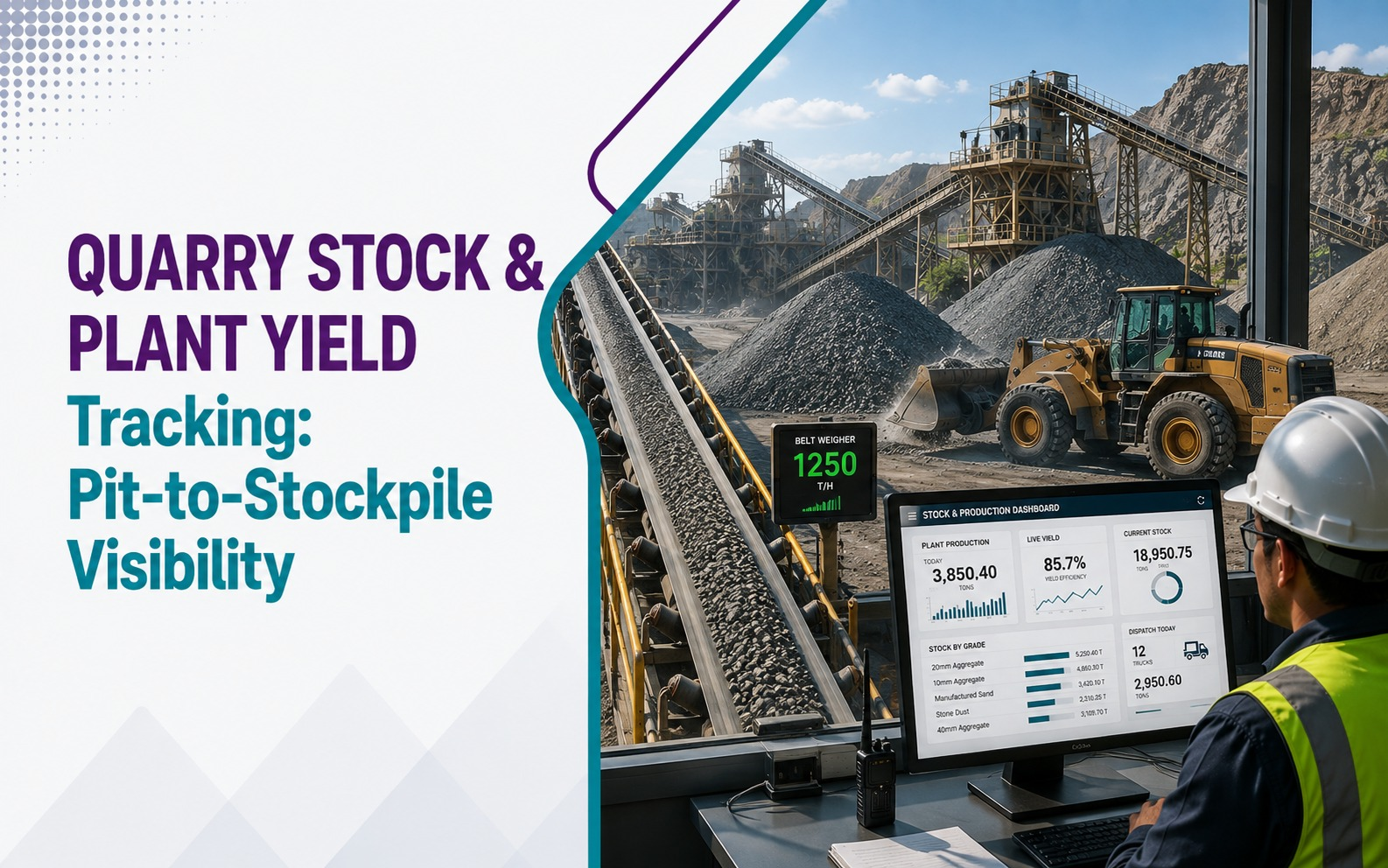

Watch operations at a busy quarry gate for an afternoon and a clear reality emerges: the exit barrier determines whether your dispatch system actually works. A haul truck can be loaded accurately and weighed properly, but if the exit checkpoint is disconnected from the rest of the site, that vehicle can still drive off as an unrecorded, unapproved movement. Quarry operators often overlook this area because it gets treated as a gatekeeper discipline issue or standard yard routine. In reality, it is a structural blind spot in how dispatch data flows across the site.
Separating Weighment Slips, Delivery Challans, and Gatepasses
People frequently mix up these three distinct documents, which creates confusion across the yard:
- Weighbridge Slip: Captures gross and tare weight numbers. It is strictly a physical measurement record.
- Delivery Challan: Details customer orders, item descriptions, and designated drop points. It is a commercial shipping record.
- Gatepass: The physical, time-stamped clearance allowing a loaded vehicle to leave the property.
On paper, all three ought to match up perfectly. In traditional manual yards, they exist as three distinct paper slips created by three separate workers at three separate locations, with zero automated checks keeping them in sync.
The Gate Is a True Control Point, Not Just a Barrier
It is easy to dismiss the gate as an operational formality. After all, the weighbridge captured the gross tonnage and the dispatch clerk printed the invoice, so the exit seems like just another place to lift a barrier.
In reality, the gate is the exact physical spot where commercial authorization must align with actual loaded materials. Weighbridges measure tons. Schedulers manage truck queues. The gate operator has to verify whether that specific truck is actually cleared to roll out onto the highway. When that verification relies on informal trust, familiar faces, or quickly scribbled paper logs, the exit stops acting as a control barrier and turns into an open door.
The Quiet Reality of Manual Gatepass Breakdowns
Manual systems rarely collapse with massive, obvious failures. They spring small, quiet leaks during normal routines:
- A gate guard skips logging an entry during a four-truck bottleneck to prevent road congestion.
- A driver receives a paper pass, delays departure, and rolls through later when the guard assumes the truck was already logged.
- A relief guard on the evening shift writes out a duplicate gatepass because shift handover notes are unclear.
None of these occurrences require bad intentions. They happen naturally when control relies purely on individual worker alertness during hectic operating shifts without system checks.
Over time, a persistent variance emerges between dispatch office records and exit register tallies. On any single afternoon, a few missing tons seem minor. Across months of heavy production, those untracked departures turn into significant volume losses that nobody can reconstruct or explain from old paper files.
The Financial Impact: Unbilled Material Losses
This financial leak is distinct from standard weighbridge disputes or billing arguments over tare weights. This issue involves aggregate physically driving out of your gates without an active, verified invoice behind it.
You are not arguing with a client over five hundred kilograms of crushed stone; you are losing entire truckloads without ever booking the sale. A truck that leaves without a live sales match represents lost raw material that simply vanishes from inventory counts. When these small daily log discrepancies repeat through a full quarrying season, the financial drain on the enterprise becomes severe.
Making Live Validation Mandatory for Every Exit
The only secure method to manage this checkpoint is tying physical exit directly to live sales orders and verified customer credit limits.
The gate clearance should never rely on the gatekeeper making an independent judgment call. It must serve as confirmation that an authorized transaction exists in the system. If an account is locked due to overdue balances or if an order lacks valid line items, the exit barrier must stay down. That check needs to occur in real time at the barrier, not days later during accounting audits.
Integrating Yard Operations into One Chain
Operations improve when sites eliminate isolated paper logbooks. The exit barrier must become a continuous step inside the broader workflow that includes weighment capture and dispatch ticketing.
When a haul vehicle completes weighment against an approved order, that same transaction should instantly unlock the exit gatepass. There is no need for manual re-entry or separate paper checks. The exit is simply the final validation link in the complete production cycle from rock face extraction to customer billing.
Active Prevention versus Historical Traceability
Two key operational objectives often get lumped together here:
|
Capability |
Core Function |
Operational Purpose |
|
Active Prevention |
Real-time exit validation |
Stops unverified trucks from leaving the property in the moment. |
|
Historical Traceability |
Permanent digital audit trail |
Allows management to review which driver cleared the gate, at what time, and under which order. |
A site might prevent unauthorized exits today, but if records are stored in paper books, auditing them next month is nearly impossible. Both capabilities are essential, and software solutions should deliver both.
Shift Changes, Multiple Gates, and Lost Records
A compact site with one gate and one day shift can often survive on paper logs because a single supervisor remains accountable. As soon as you add second shifts, night operations, or secondary exit gates, paper records fall apart. Handover windows between shifts and communication gaps between separate gate posts are where unauthorized or unlogged departures slip through. This vulnerability hits medium multi-shift quarries just as hard as sprawling mining sites.
Evaluating Automated Gatepass Claims
Many software tools claim to automate gate passes when they merely replace paper logbooks with digital typing forms. Ask practical questions during system evaluations:
- Does the exit gate dynamically validate inventory allocations and live customer balances, or does it simply print another slip?
- Can administrators pull up detailed departure records tied to specific weighment tickets, or just generic daily summaries?
- Does the workflow enforce system checks, or does it still depend on manual staff decisions at the barrier?
Software must eliminate manual gaps rather than just adding another computer screen to the security booth.
How GrowBiz ERP Handles Quarry Gate Clearance
GrowBiz ERP Quarry & Crusher software closes these dispatch gaps. It ties barrier gate clearance directly to real-time weighbridge data and commercial sales approvals, turning the gate into an automated verification checkpoint.
To explore how this integration protects your bottom line, review our Quarry & Crusher ERP features, or look into the wider GrowBiz ERP platform across ready-mix concrete, brick manufacturing, and heavy industrial operations.